

Roof racks
Can my car support the weight of the tent and occupants?
Absolutely. Because there is no attachment to the roof of the vehicle.
The roof racks are attached to the roll bars, which must be able to support the weight of the vehicle itself. Because in the event of an accident, the vehicle can tip over.
NaïtUp roof tents can be installed on vehicles equipped with compatible crossbars: city cars, vans, 4x4s, commercial vehicles, pick-ups, station wagons, etc.
How much weight must the roof racks be able to carry?
The necessary load capacity for the roof racks is the dynamic weight. This means the weight when the car is driving. Therefore, the weight of the folded tent is the standard for choosing the roof rack.
If your car is stationary and you go camping in the tent, the roof racks can carry much more weight. For the tent itself, the maximum weight is 250 kg.
There are 2 types of roof racks: crossbars and longitudinal roof racks.
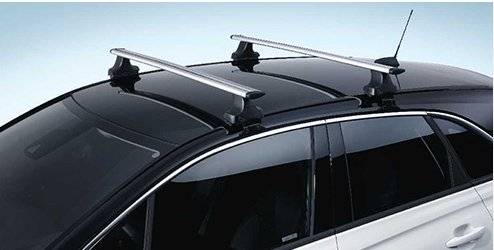
Cross roof racks
These can be installed
- On the side members
- On the mounting points (or rails) of the vehicle's roof
- In the gutters on the roof of your car
These roof racks should be chosen based on the model of your vehicle.
For the installation of a NaïtUp roof tent, 2 cross roof racks are sufficient.
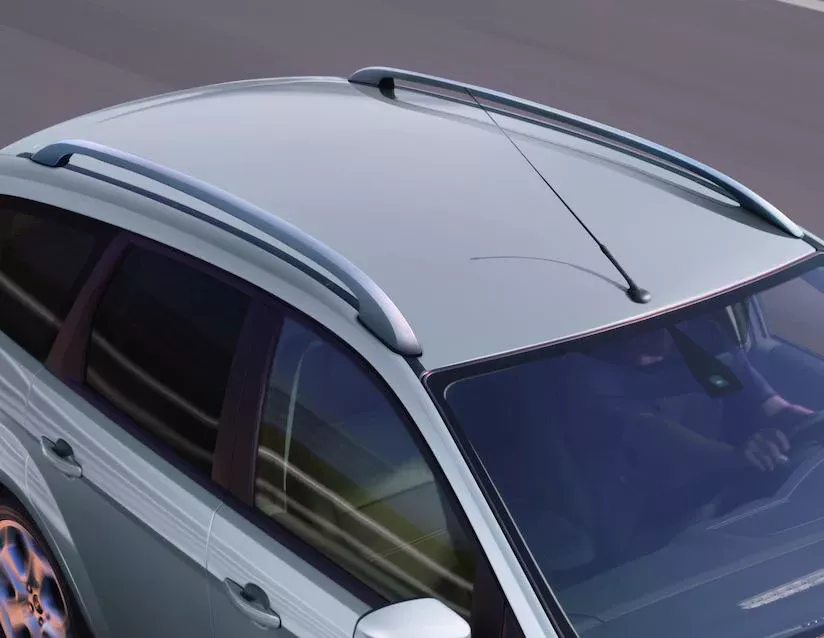
Roof racks in the longitudinal direction of the vehicle
It must be checked whether these are decorative or not. If they are decorative roof racks, it is not possible to place a roof tent on them.
If the longitudinal beams (not decorative) are strong enough, you can mount the cross beams with clamps, i.e., without mounting feet because these are mounted on the longitudinal beams.
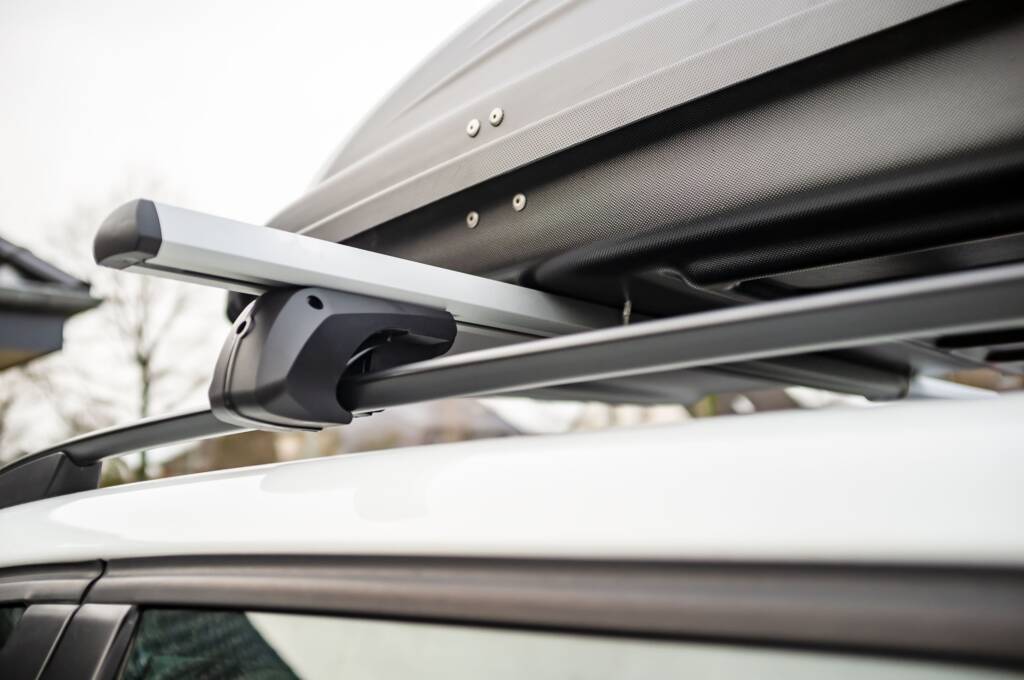
The different roof rack attachments
There are different types of roof rack mounts, some of which are compatible with the installation of a roof tent.
The following roof racks have a shape suitable for the installation of a roof tent.
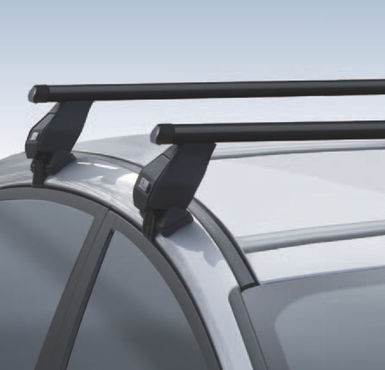
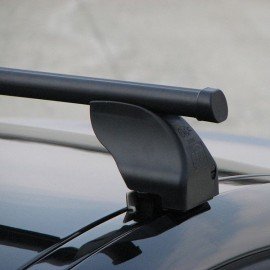
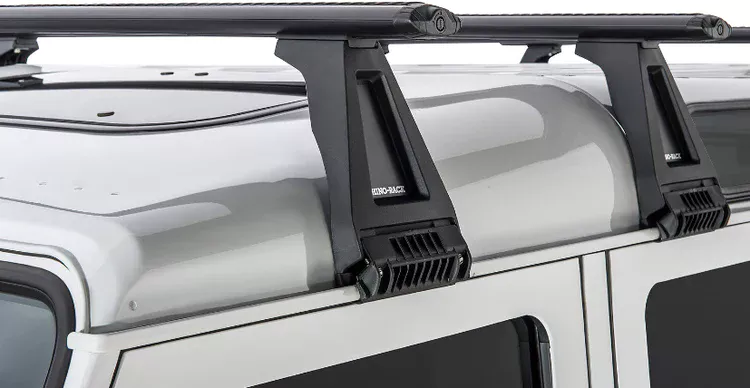
Roof rack mounts that are NOT COMPATIBLE:
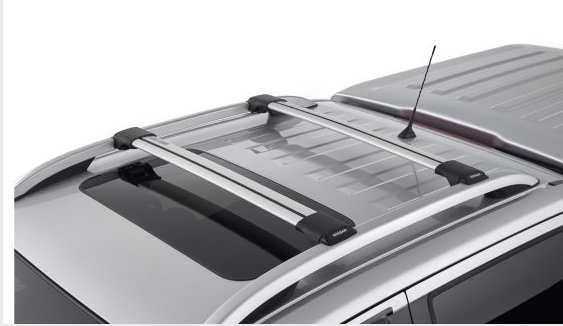
Which type of roof rack should I choose?
Thanks to the patented NuFix mounting system, the Hussarde NaïtUp fits on most roof racks.
Ultrathin or very wide (16 cm), round, square or flat, the bits adapt. However, there are still precautions you need to take before choosing your roof racks. Ideally, the shape of your bars should be as simple as possible.
To be compatible with the roof tent:
- Ideally, your roof racks are at least 110 cm long.
- The top of your rods must be at least 8.5 cm away from your roof .
- The distance between the two rods must be at least 70 cm and at most 125 cm (this time from the outside of the front rod to the outside of the rear rod).
- The ideal distance is between 90 and 110 cm , where the rods are placed in the recess of the hull.
It sometimes happens that your steering system is not completely optimal, without having to rule out the installation of a Hussarde. This is the case if your roof racks are too close to your roof (less than 8 cm), if there is a height difference between the front and rear rack, or if your roof racks are bent. These inconveniences can be easily resolved with a bar blade, which we will explain to you below.
Be careful with bent and very stiff roof racks.
To compensate for the curvature of your roof racks, you need to add spacers. If this is not sufficient, you need to add fillers to further compensate for the excessive curvature of your roof racks (these fillers are not sold by NaïtUp). If the curved bars are very stiff, you can safely tighten your NuFix even further (max. 10 Nm).
For panoramic and open roofs applies : the confirmations of the roof racks (lengthwise/crosswise) must on the bodywork (metal part) are placed. They may not be placed on the glass roof sections, because they can damage the roof of your vehicle.
Why choose aluminum roof racks?
Roof racks come in two materials: aluminum and steel. Aluminum roof racks are lighter than steel roof racks. You will also appreciate the very aesthetic and streamlined design. The only downside? These roof racks are more expensive than steel ones.
Why choose steel roof racks?
Do you want to equip yourself more advantageously without compromising on quality? Steel roof racks are robust and affordable and are your best allies.
The only differences between aluminum and steel roof racks are the price and the appearance. Otherwise, the strength remains the same.
Can my tent poles and the roof support the tent and the people inside?
Yes, even in a small car.
To install a roof tent on your vehicle, your roof racks must be able to support the weight of your folded tent.
The minimum carrying weight must be 75 kg (even if the Duö itself weighs only 60 kg).
The length of your roof racks must be at least 110 cm (with the Duö they can be slightly shorter).
It is important to distinguish between the weight supported by the roof of the vehicle, the roof racks, and the tent:
- The roof: there is no mounting on the roof of the vehicle . The roof racks are attached to the roll bars, that can carry the weight of the vehicle itself. Moreover the roof of your vehicle must automatically be able to support the weight of the vehicle when it is tilted, so that it does not deform in an accident.
- Roof racks: in dynamic mode (vehicle in motion) are these the supports that carry the weight of the closed tent (minimum 75 kg).
- The roof tent: can, if stationary (vehicle is stationary), carry the weight of the occupants, i.e., maximum 250 kg.
How much weight should my roof racks be able to carry?
The most important condition for installing a roof tent is that your roof racks can support the weight of the folded roof tent.
Below you will find the weight of our tents when they are folded and empty:
-Duo: 55kg
-TriUp: 63 kg
-Quatrö/Family: 75kg
Are good quality roof racks expensive?
Not necessarily! As long as your carriers can bear the required weight , be at least 110 cm long (for the Quatrö and Family) and there is 8 cm or more space between the top of the roof racks and the roof of the vehicle (which is the case with almost all roof racks), are they suitable.
When do you use overbars?
NaïtUp has over-bars developed, with this accessory you can solve a number of problems with bar incompatibility, such as:
- Roof racks are too close to the roof (less than 8 cm between the top of the carrier and the bodywork). In this case, the crossbars ensure that the tent is raised and that the attachments do not touch the roof and therefore do not damage the roof.
- A level difference between the front and rear beams. In this case, a single crossbeam is recommended, which can be leveled for a completely horizontal installation.
- If your bars be shorter than 110 cm .
- If the distance between your bars is greater than 125 cm. If the distance is greater than 125 cm, you can use a crossbar and an anti-pinch wedge.